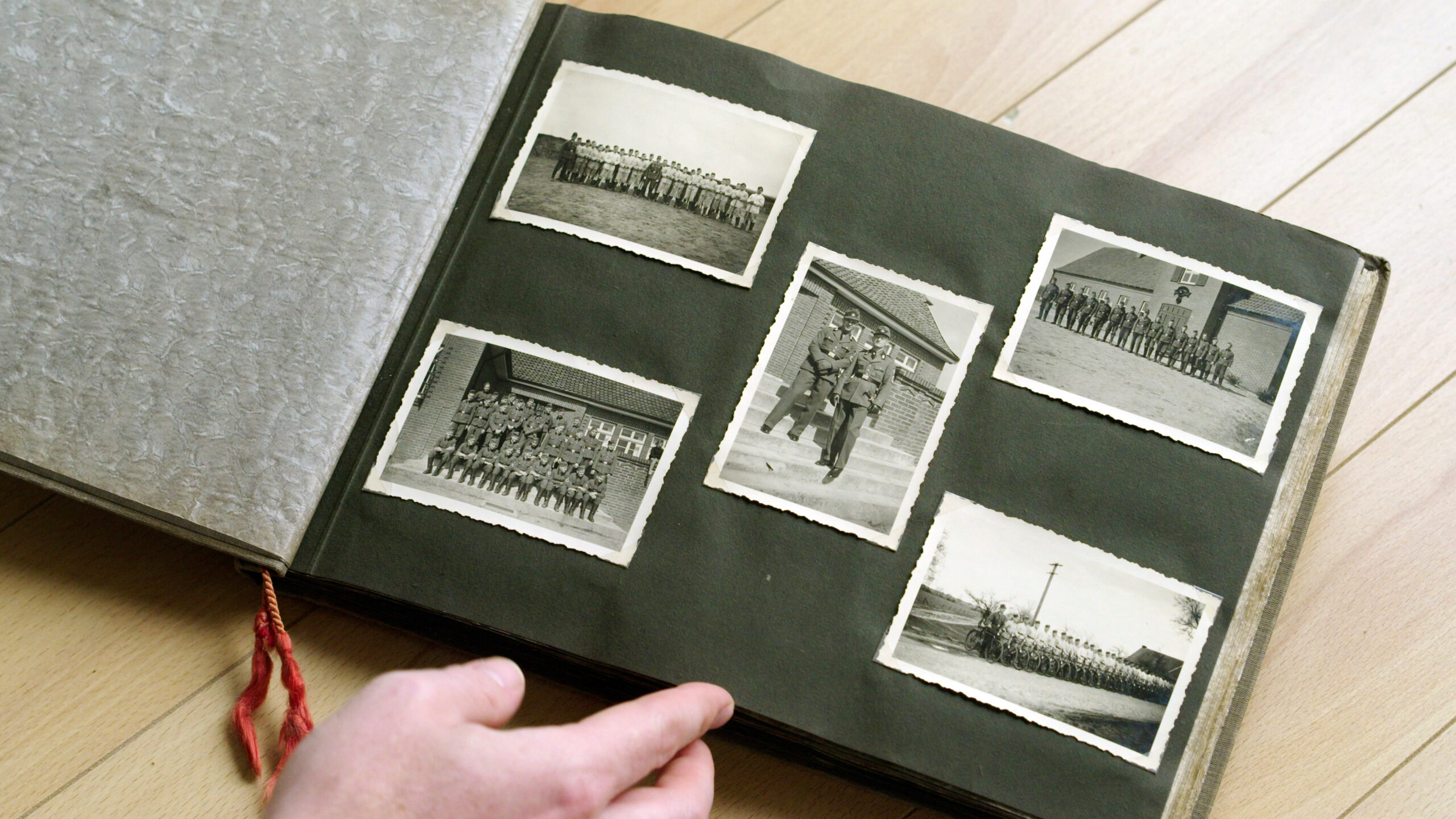
The Man with the Tiny Camera A young filmmaker documents his family life and his career in the National Socialist Labor Service, then captures the early postwar years in artistic black-and-white footage. Over two decades, he creates a body of work on eight large rolls of 9.5 mm film that is exceedingly rare, both in terms of content and quality. This documentary takes viewers on a journey through the idyllic garden of a family home, the streets of occupied Paris, bombed-out Ukrainian cities, Polish ghettos, forced labor camps, and the peaceful Vienna of the 1950s. This is when the Austrian federal chancellor Leopold Figl oversees the Catholic confirmation of 143 children, including the filmmaker’s daughter. The eight rolls of film are the personal story of an average citizen and the trivializing depiction of his actions during one of the most challenging periods in world history. The fascinating two-part documentary The Man with the Tiny Camera, by director Andreas Kurz, sets out to learn more about the amateur filmmaker and the origins of the film footage. With the aid of historians, the film reconstructs the places and conditions in which the footage was captured and, eventually, manages to trace the descendants of the man with the camera. The project also reinforces the necessity of comprehensively studying and interpreting historical records, revealing both the many holes in the narrative conveyed by the filmmaker and the dangers of judging past events by the standards of the present.

 Selection Cart


