Additional information
| Brand | |
|---|---|
| Genre | |
| Year of Production | |
| Language | |
| Duration | |
| Resolution |

ORF-E
English
1 x 52 min
Worldwide
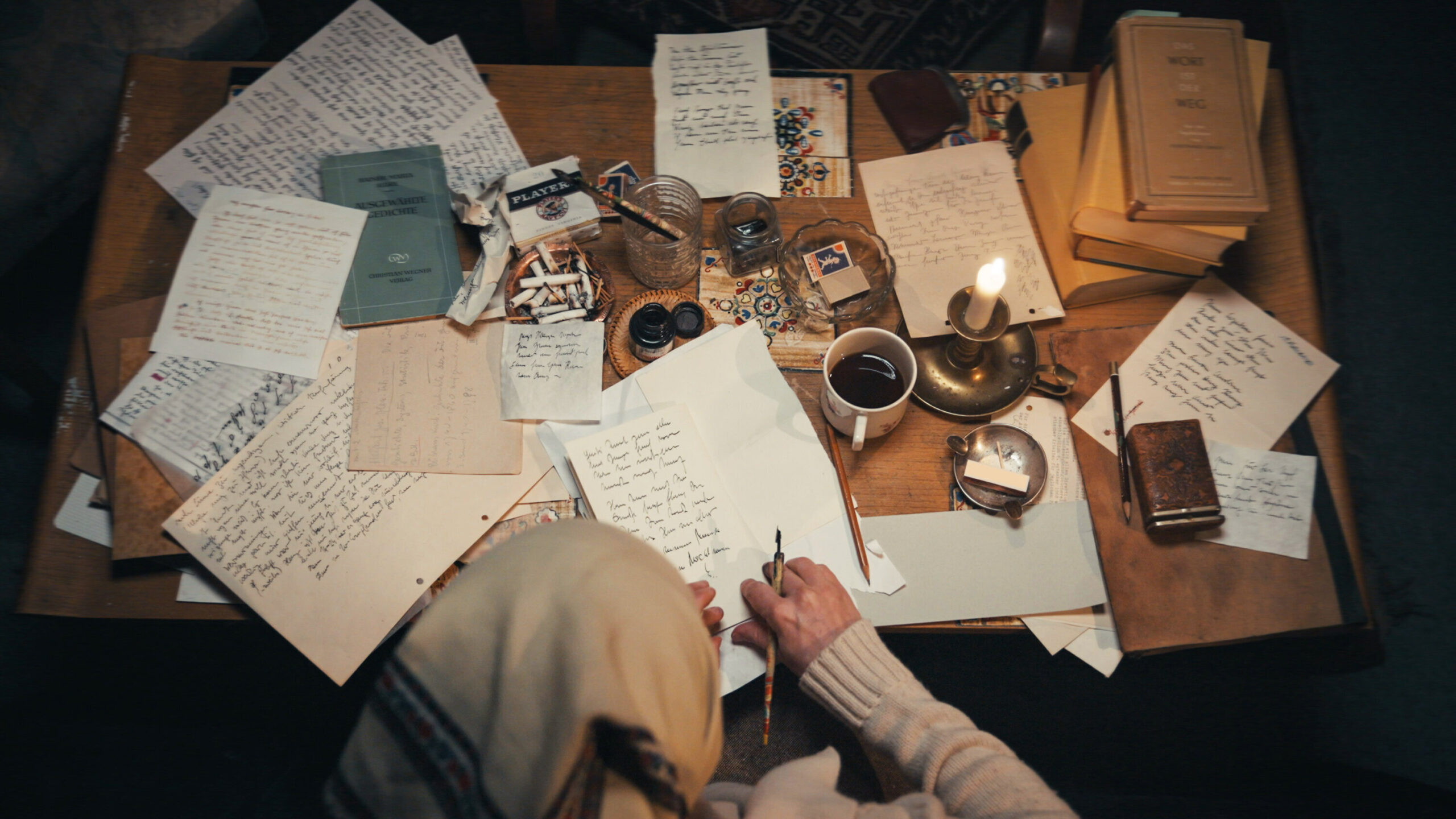
Christine Lavant’s poetry is among the most original and best written in the German language in the 20th century. As a great prose writer, the Austrian poet is still largely unknown to the general public. She speaks ravishingly of what is most familiar to her: Of the wounded souls of women and children, of poverty, illness and exclusion. Of the subtle and not so subtle social differences. Of forced conformity, bigotry and violence – but also of the liberating power of love and imagination. Christine Lavant was born in 1915 in the southern province of Carinthia in the Lavant Valley. Her family name was Thonhauser, and she used the name Lavant (after the river of the same name) as a pseudonym from 1948. Her life was marked by poverty, illness and depression – but also by great inspiration and creativity. The poet died in Carinthia, Austria, in 1973. In her incomparable, cinematic language, director Danielle Proskar traces the life of the great Austrian writer.
 Selection Cart